Understanding the Connection Between ADHD and Autism

ADHD and autism often get discussed as separate conditions, but in real life they can overlap in confusing ways. A child may seem constantly in motion and also struggle with changes in routine. An adult may miss social cues and also lose track of time, keys, bills, and appointments. These patterns can make diagnosis, support, and self-understanding feel complicated.
The ADHD and autism connection is real, but it is not always simple. The two conditions are different, yet they can share traits, occur together, and affect daily life in ways that look similar from the outside.

ADHD and autism are different neurodevelopmental conditions
ADHD and autism are both neurodevelopmental conditions. That means they affect how the brain develops and processes information. Both can shape attention, learning, movement, communication, and emotional regulation.
ADHD, or attention-deficit/hyperactivity disorder, is commonly linked with:
Trouble sustaining attention
Impulsivity
Restlessness or high activity
Difficulty starting or finishing tasks
Forgetfulness
Time management struggles
Autism, or autism spectrum disorder, is commonly linked with:
Differences in social communication
Repetitive behaviors or focused interests
Strong need for routine or predictability
Sensory sensitivities
Differences in eye contact, gestures, or conversation style
Preference for specific patterns, topics, or ways of doing things
The word “spectrum” matters. Autism can look very different from person to person. ADHD can also vary widely. Some people are outwardly hyperactive, while others mainly struggle with focus, working memory, and mental restlessness.
Where ADHD and autism overlap
ADHD and autism can look similar because both affect the brain systems involved in attention, self-regulation, and processing the environment.
A person with either condition may struggle with:
Following multi-step directions
Switching from one activity to another
Managing emotions
Handling noise, lights, textures, or crowds
Keeping up with school, work, or home routines
Sitting still in situations that demand it
Making and maintaining friendships
This overlap can lead to misunderstanding. For example, a child who does not respond when called may be deeply focused, overwhelmed by sound, unsure how to respond, or all three. An adult who avoids social plans may be anxious about unpredictable conversation, exhausted from masking, distracted by competing tasks, or sensitive to the environment.
The behavior alone does not always explain the cause. That is why a good evaluation looks at patterns over time, not one isolated trait.
How ADHD and autism can appear together
Some people have both ADHD and autism. In the past, diagnostic rules made it harder for clinicians to give both diagnoses. Current clinical practice recognizes that the two can co-occur.
When ADHD and autism appear together, daily challenges can become more layered.
For example, ADHD may create a strong pull toward novelty, movement, and stimulation. Autism may create a strong need for sameness, predictability, and recovery time. The result can feel like an internal tug-of-war.
A person may crave a new project, then feel distressed when the project changes the routine. They may want friends, but find the planning, noise, and social guessing exhausting. They may hyperfocus on an interest for hours, then struggle to complete basic tasks like eating, showering, or replying to messages.
This combination can also affect emotional regulation. Frustration may build quickly when plans change, instructions are unclear, or sensory input becomes too intense. What looks like “overreacting” from the outside may be a nervous system hitting its limit.
Key differences that can help clarify what is happening
Even with overlap, there are clues that can help separate ADHD traits from autistic traits. These are not diagnostic rules, but they can guide better questions.
Attention may work differently
In ADHD, attention often shifts quickly. A person may want to focus but feel pulled away by sounds, thoughts, movement, or unrelated ideas. Tasks that are boring or unclear can feel almost impossible to start.
In autism, attention may become deeply focused on specific interests, routines, or details. Shifting away from that focus can be hard, especially when the change feels sudden or unnecessary.
A person with both may experience both patterns. They may lose focus on chores but spend hours researching a favorite topic.
Social challenges may have different roots
In ADHD, social difficulties may come from impulsive speech, interrupting, missing details, or forgetting to follow up. The person may understand the social rule but act before they can use it.
In autism, social differences may come from reading cues differently, finding small talk confusing, needing direct communication, or feeling drained by social performance. The person may communicate best when expectations are clear and literal.
Both can lead to hurt feelings or isolation, even when the person wants connection.
Routine and novelty may create tension
Many people with ADHD seek stimulation and variety. New ideas can feel exciting and motivating.
Many autistic people find comfort in routine and predictability. Sudden changes can feel stressful or disorienting.
Someone with both may need novelty within structure. For example, they may do best with a predictable morning routine but flexible choices inside it, like choosing between two breakfasts or two exercise options.
Why diagnosis can be missed or delayed
ADHD can sometimes hide autistic traits, and autism can sometimes hide ADHD traits. A person who has learned to mask may appear “fine” in public, then collapse from exhaustion at home. A student with strong grades may still be struggling with planning, sensory overload, or social confusion.
Girls, women, and people with less obvious outward behaviors may be overlooked. So may people who learned early to copy others, suppress movement, or rehearse conversations.
A thorough evaluation may include developmental history, behavior rating scales, interviews, school or work history, and screening for anxiety, sleep issues, learning differences, and trauma. These can affect attention and social behavior too.
Support works best when it fits the person
Support does not have to wait for perfect certainty. If a strategy helps, it helps.
Useful supports may include:
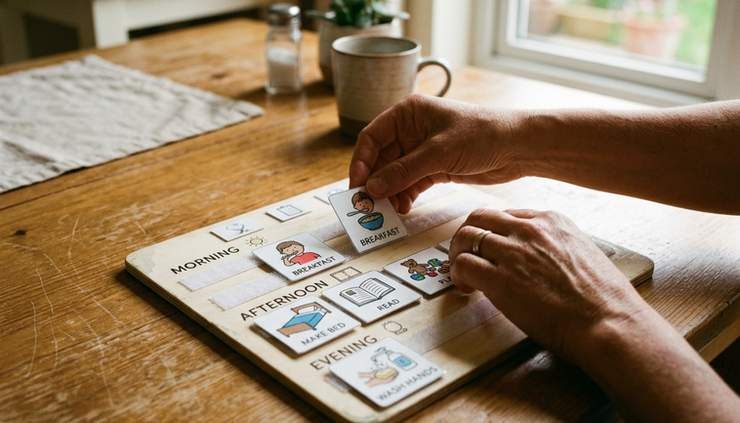
Clear routines with visual reminders
Short, specific instructions
Movement breaks
Noise reduction tools
Timers and alarms
Sensory-friendly spaces
Direct communication
Written follow-ups after verbal instructions
Smaller task steps
Extra recovery time after demanding situations
Medication may help some people with ADHD symptoms, but it should be discussed with a licensed clinician. Autism support often focuses on communication, sensory needs, daily living skills, emotional regulation, and reducing unnecessary stress. For people with both, care should address the whole person rather than treating one diagnosis in isolation.
The takeaway
ADHD and autism are separate conditions, but they can overlap in traits and occur together. Understanding the connection can reduce shame and make support more precise.
The most helpful question is not “Which label explains everything?” A better question is, “What is this person’s brain asking for, and what support makes life more workable?”
When attention, sensory needs, routines, and communication are all considered together, the picture becomes clearer. That clarity can lead to better care, better self-understanding, and a daily life that feels less like a constant fight.



Comments